RFID management with printers and tablets

PRINTERS

oshiba B-EX4 T1 PRINTER: it has been used for reading, writing and printing Pallet Cards and product labels using different types of RFID labels.

TABLET

HST-510:it was used for reading RFID labels, both via RFID antenna and with integrated barcode reader previously printed on the label, for the management of P.L.A.C.‘s finishing pallets, with the possibility of managing orders and traceability of pallets and their contents

Mounting Plastic Components

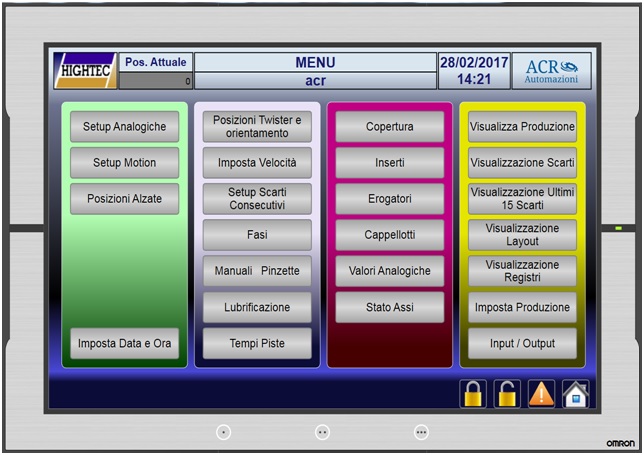
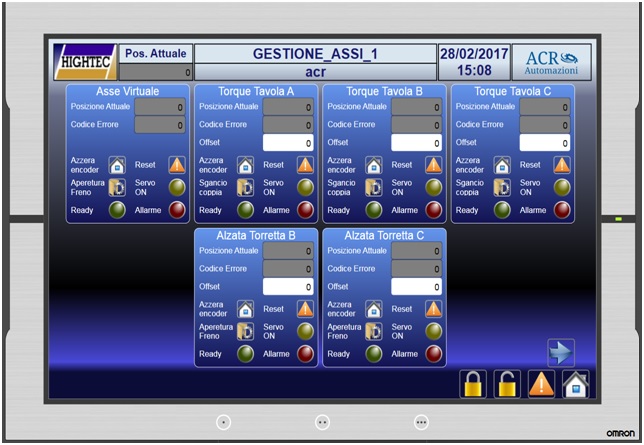
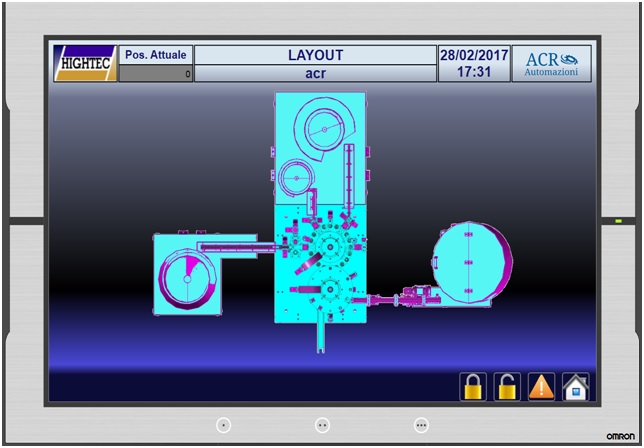
The machine deals with the assembly of plastic components that will form a complete cappellot dispenser. The movement of the machine is realized through a series of controlled axes whose motion is synchronized through mathematical formulas specially created.

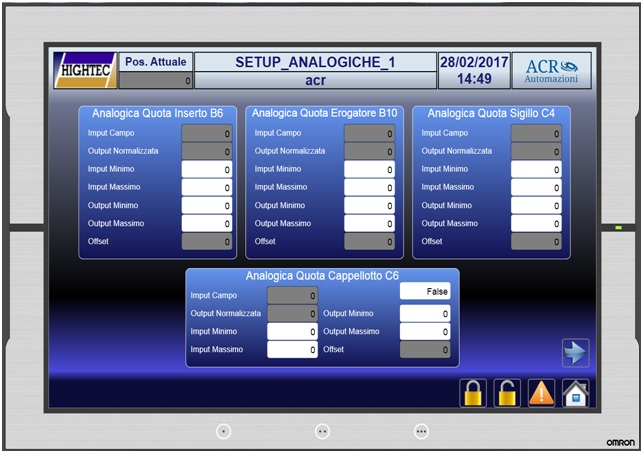
A series of analog controls downstream of the various operations ensure the correct assembly and quality of the final products.

The solution that has been identified is the adoption of the new Omron NJ PLC

Automated Semi-Finished Production

Coster Tecnologie Speciali is a Trentino company specializing in the production of valves and accessories for spray cans, with branches all over the world. In 1996, the Coster3 plant was inaugurated for Aerosol Valve Production Units, with modern hull finishing units, valves assembly and molding components operating in a totally automatic manner.

The project developed by Siemens and Hightec for Coster was aimed at creating a new semi-finished plastic production department to handle the production of dozens of automatic presses, a system of automatic trolleys (LGVs) for supplying raw materials, Product disposal and an automatic labeling and palletizing system, interfaced with the centralized system for the delivery phases of the order to produce and pour finished products.

Having Coster in need of continuous production of the molding department, the system had to be characterized by maximum reliability and modularity and by stand-alone operation that did not require connection to the central server. In addition, the company demanded that no machine be stopped. The solution was based on a distributed architecture that can handle the entire molding department through a Profinet network dimensioned to achieve redundancy where needed without the help of hot-backup systems, which are used instead for more critical applications.

The solution that has been identified is the adoption of Siemens Simatic PLC with the following configuration:

CPU S7-400 modello 417

CPU Safety serie IM151-8F PN/DP

Periferica Decentrata Profinet IM151-3 PN/HF

Adapted from : “Automazione e Strumentazione: Elettronica Industriale” Marzo 2014, Anno LXII – N.2

http://automazione-plus.it/brochure/as/2-2014/files/assets/basic-html/page48.html
http://automazione-plus.it/brochure/as/2-2014/files/assets/basic-html/page49.html

Complete palletisation system

Complete palletisation system
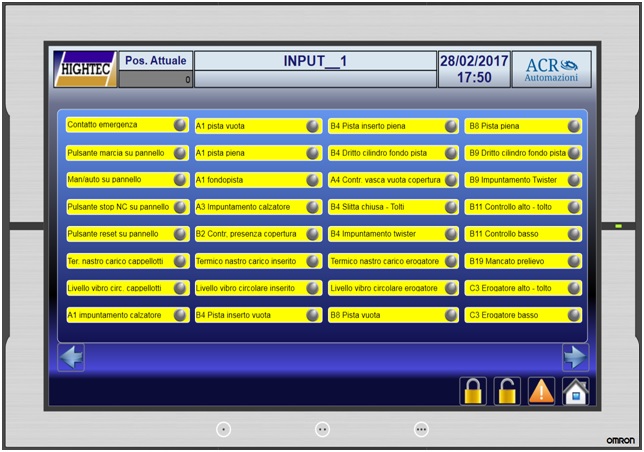
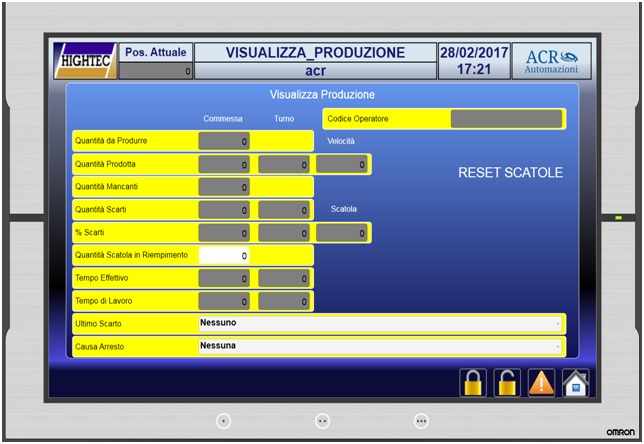
Software for the complete management of the last stage of the production line: from box sorting management, to palletisation and pallet handling.
The system manages the reception of production orders and their processing, box sorting through bar codes or RFID,
box palletisation, pallet card printing, packing list printing for outgoing pallets (with relative transmission of the confirmation to the management system).

General product handling tracking

on-line product tracking supervision and management system, encoding with bar codes or data matrix,
interfacing with anthropomorphic robots for processing of on-line products, generating reports for the jobs performed
and for the jobs to be performed, production statistics and real time display of the status of the
various processes and the relative results.
All the information is available locally or exported to the company management system.

Mixing system

Dosing and mixing systems:
mixing and dosing plant management and supervision systems; management of single recipes and/or consecutive batches; management of extraction from silos through augers, scales or weighing belts, with automatic correction of the parameters set; recipe creation, storage and recall in both manual and automatic mode;
bidirectional connection with the facility management system.

Milk production supply chain tracking

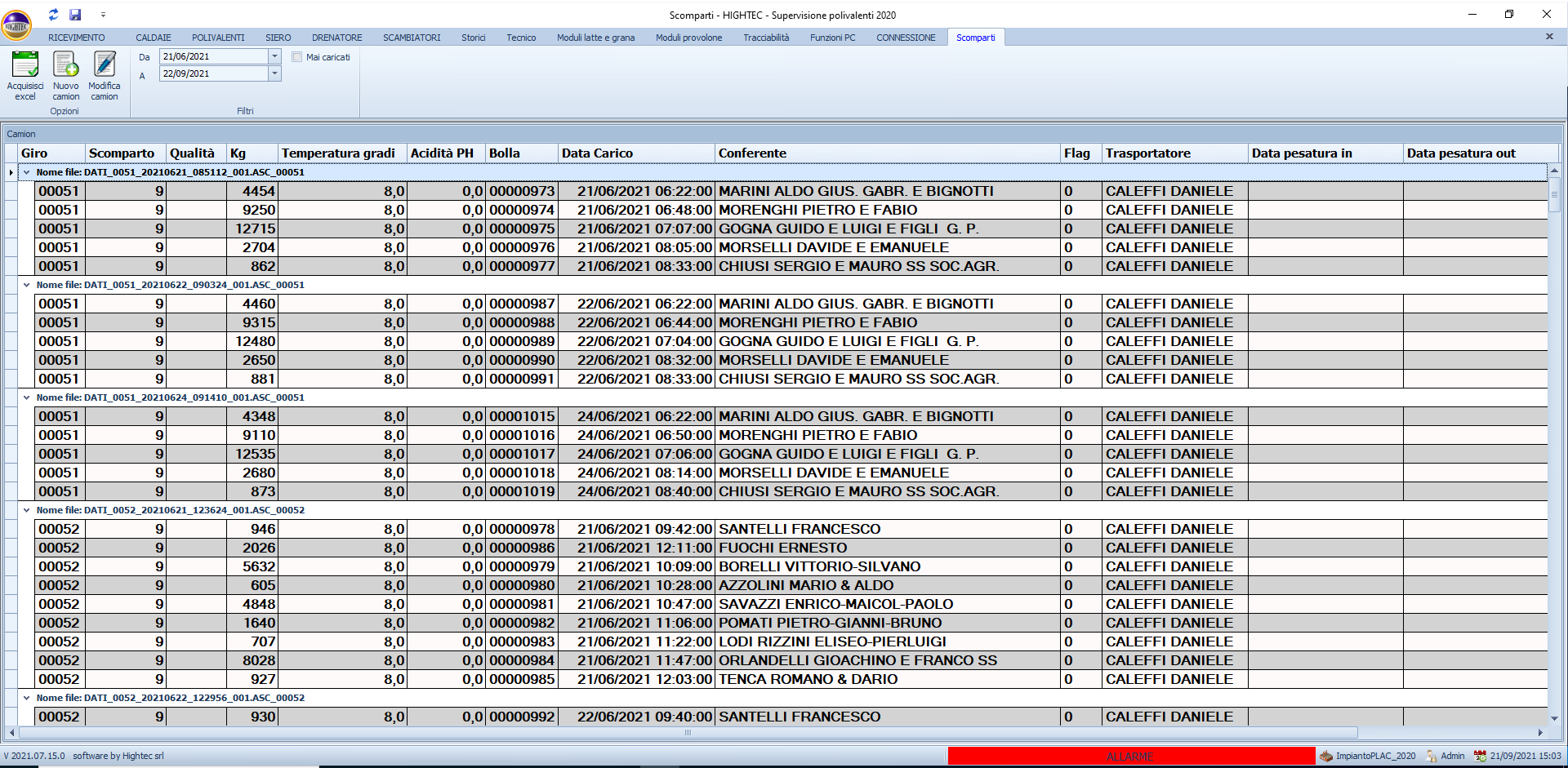
The milk production supply chain tracking process starts from when the product coming from the farm is unloaded, going through the various
processes until it becomes a finished product (dairy products and cheeses).
The milk conditions (temperature – PH) are recorded automatically for every single unloading stage and, by creating a product sheet,
the chemical analyses carried out subsequently by a laboratory through the samples
collected are added.
Therefore at any time it is possible to always trace back to the characteristics of the milk that was used for the production of a certain batch, in order to identify any processing abnormalities of the production chain.
An important aspect of the milk supply chain is tracking
the sanitisation of the systems.
All the washing and sanitising cycles are tracked, recording the start time and duration and indicating the washing temperatures and concentrations of sanitising solution
with which the systems were washed.

dairy industry

Dairy industry systems:
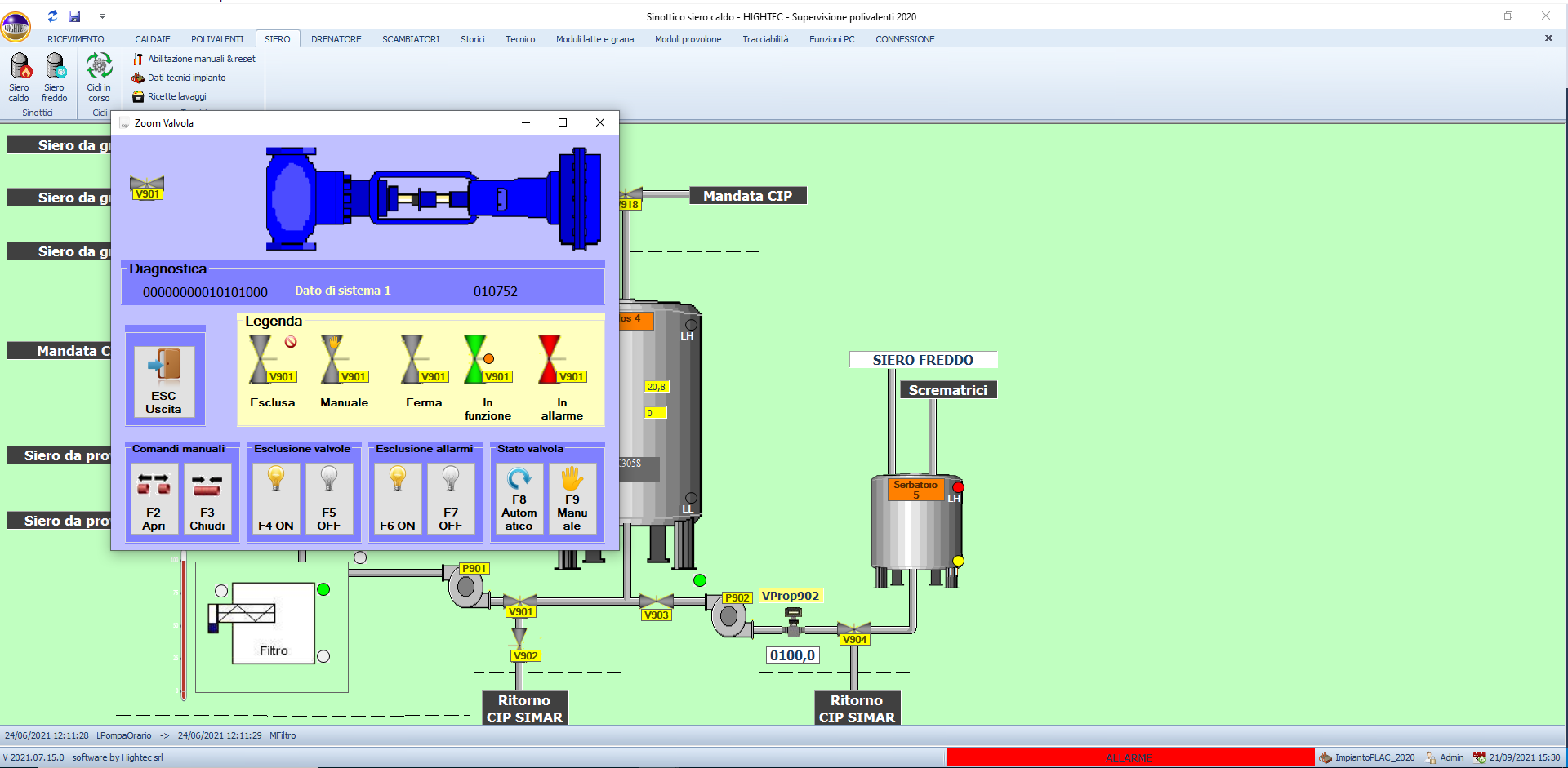
dairy industry facility management and supervision systems.
The system manages all the individual departments that may form a complete
production facility:
Milk reception and storage, milk processing in boilers for the production of Grana cheese
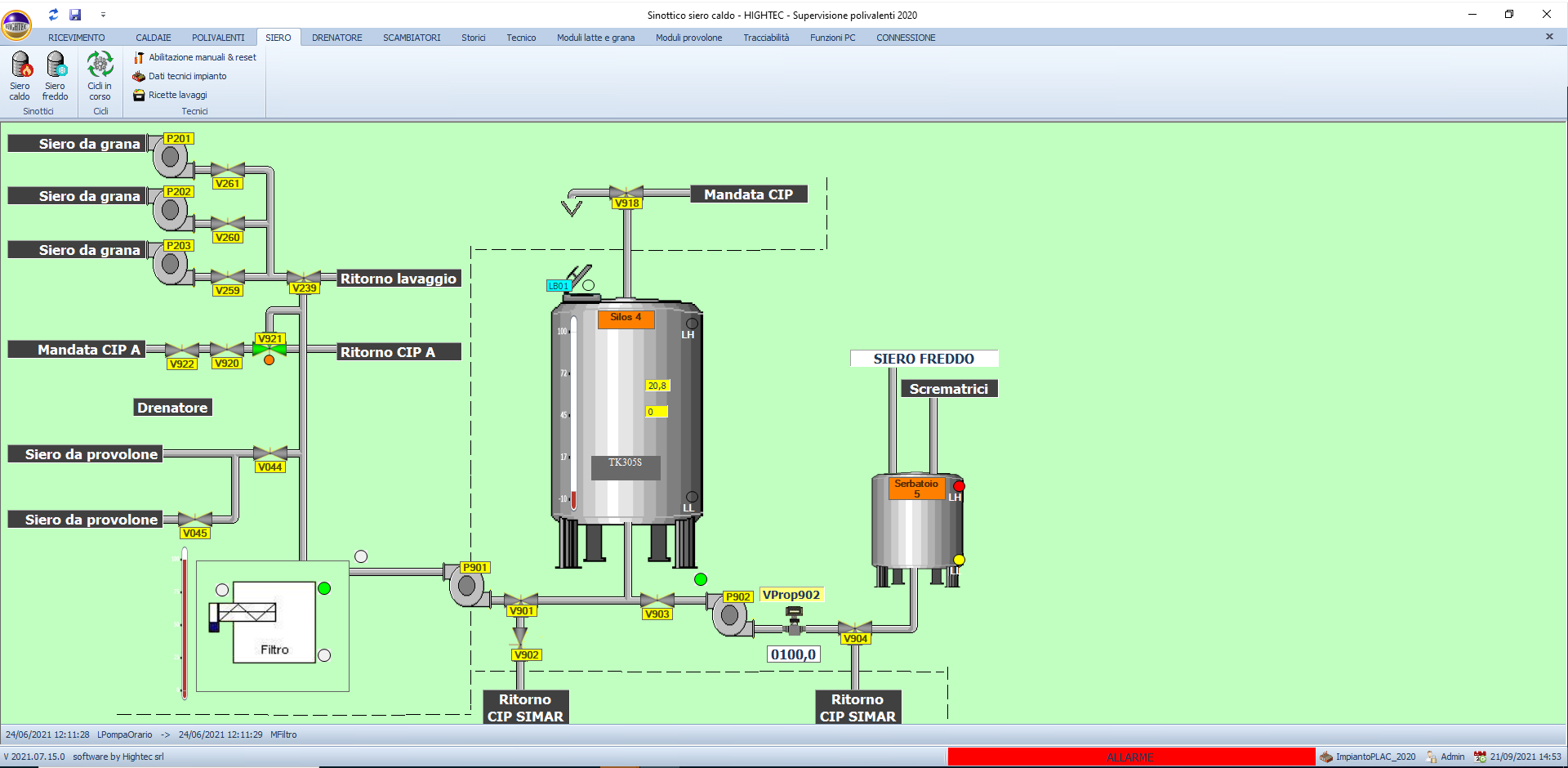
or in multipurpose tubs for the production of soft cheeses; pasteuriser management, whey processing complete automatic CIP for washing all the parts of the system.
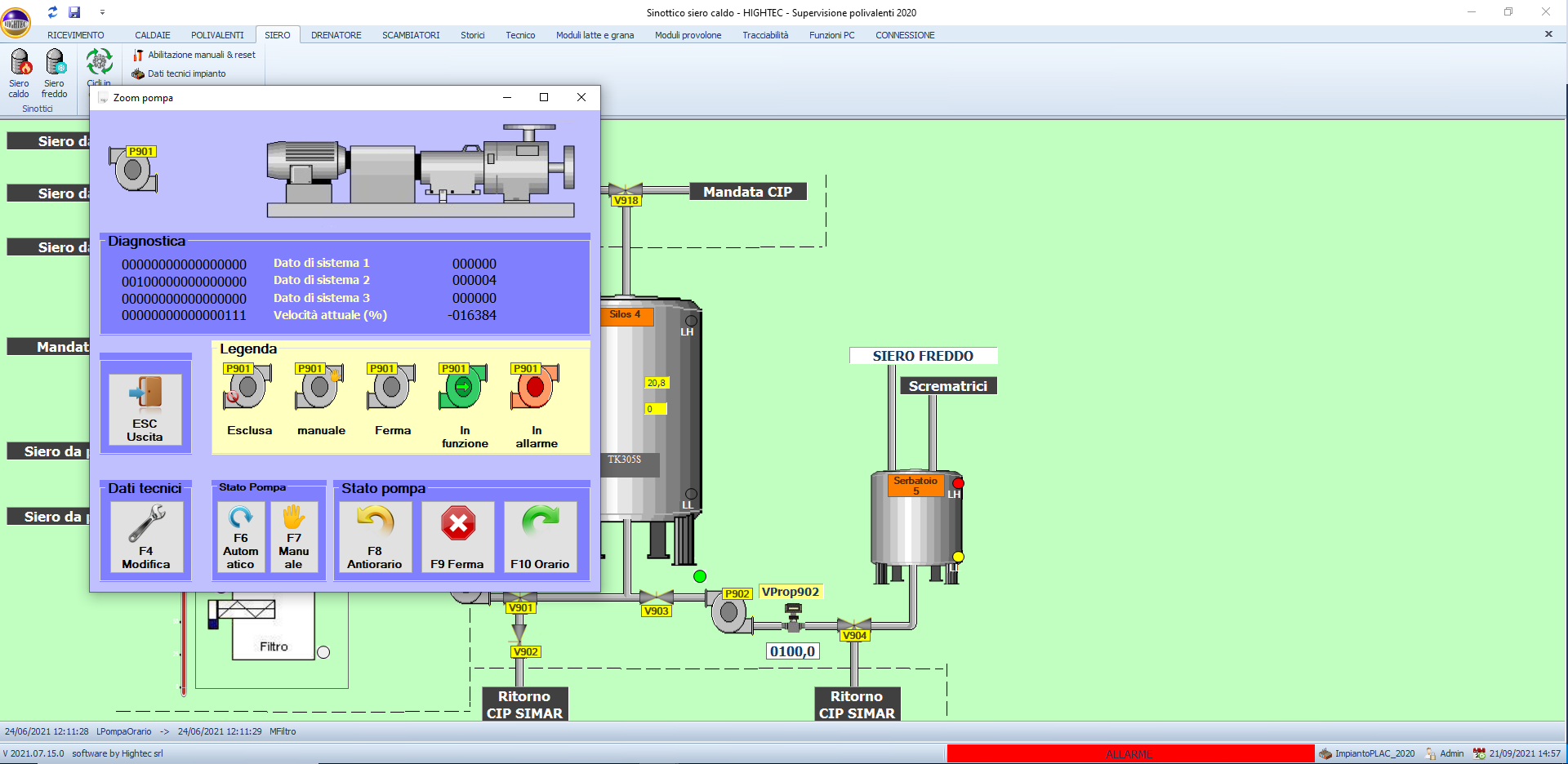
Complete supervision with display on animated synoptic screen of all the
system components.
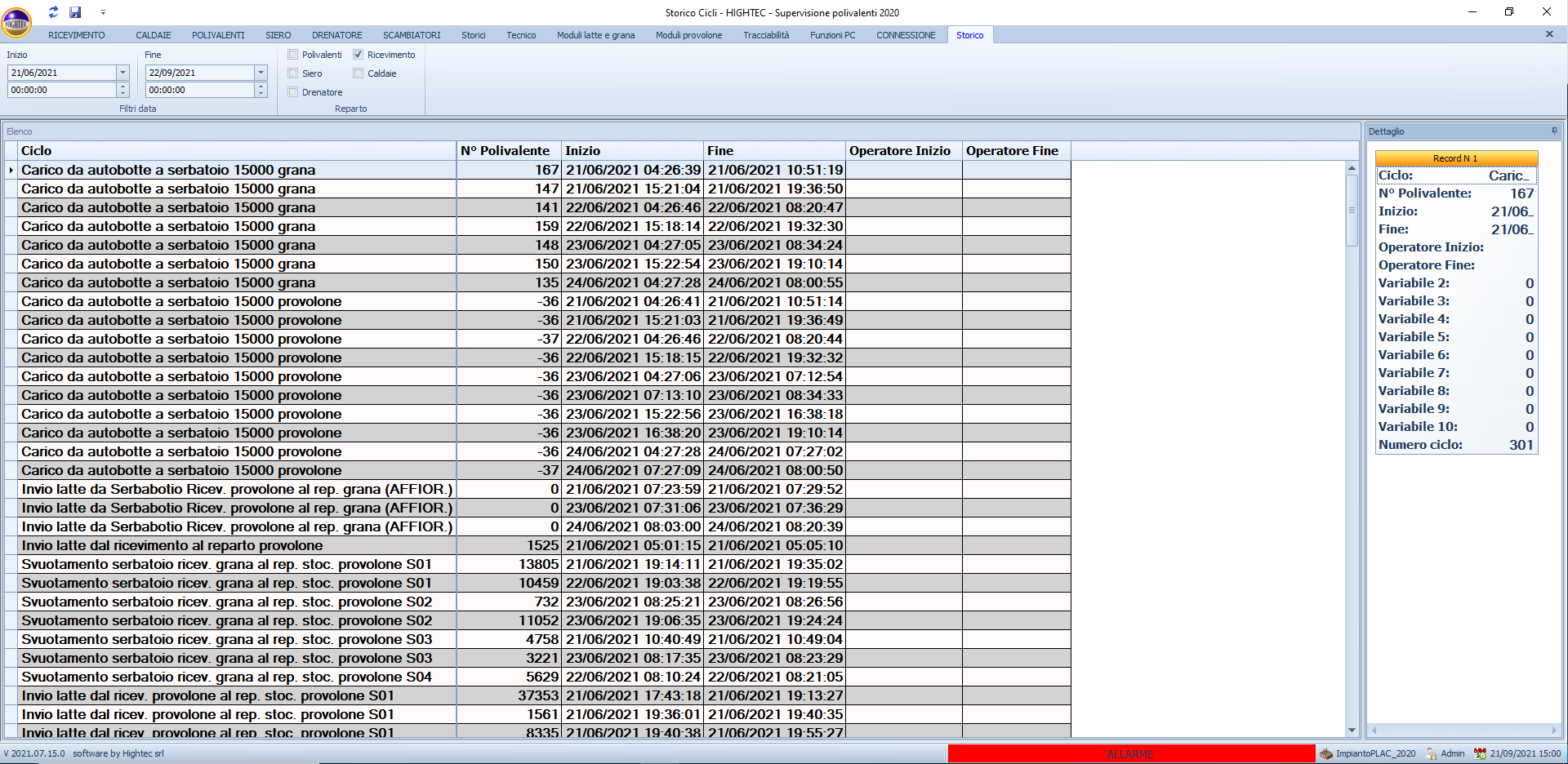
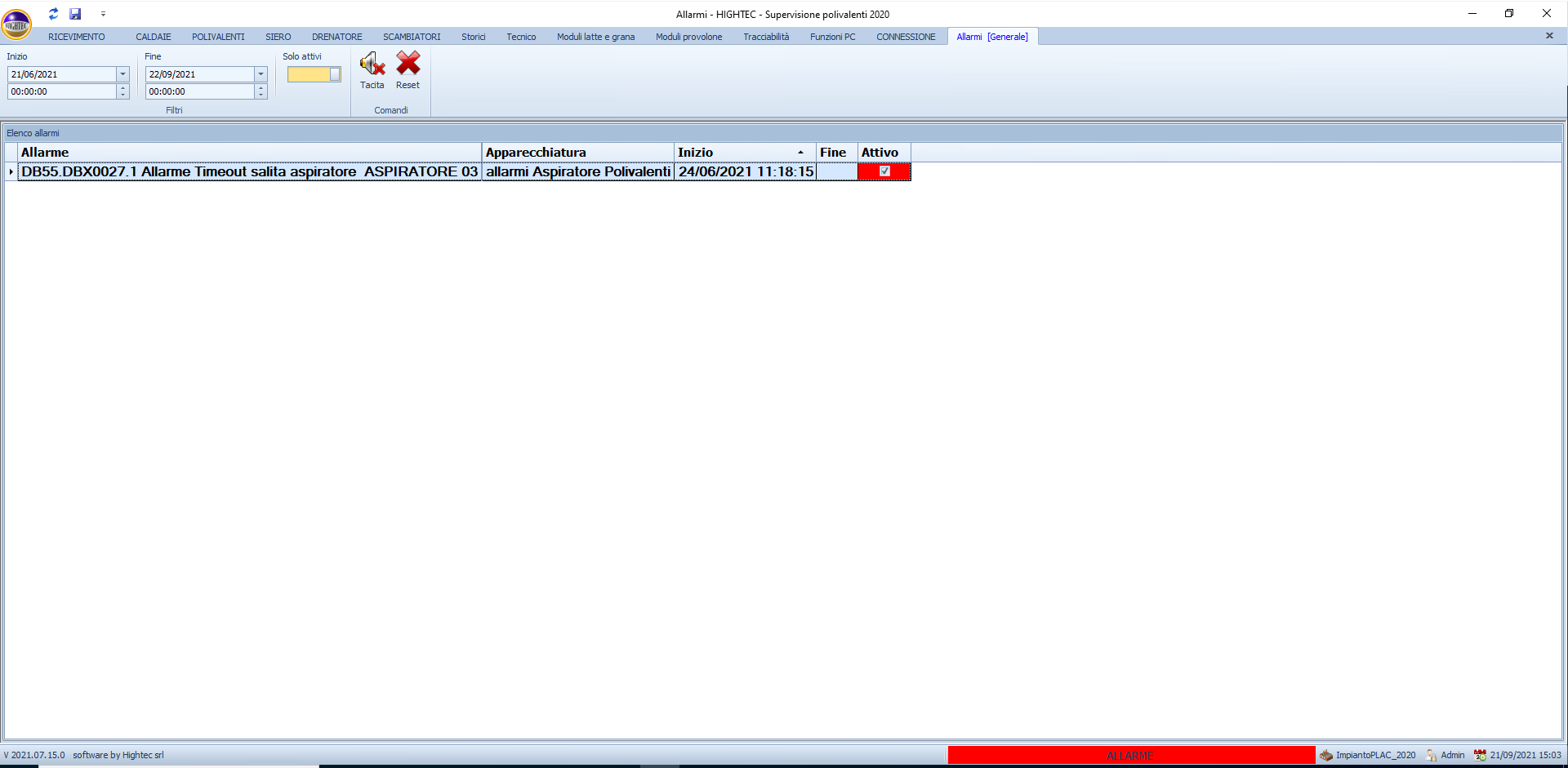
Database recording of all events occurred (start date/time and end of the cycle with quantities and/or temperatures)
Alarm activation with their duration,
Recipe programming,
Production parameter recording and production batch tracking.